 Slow Food bevægelsen er ved at opbygge et nyt, globalt netværk af Slow Food Farms. Netværket samler – og synliggør – de jordbrug, der opbygger jorden, menneskene og de andre liv, som skaber / indgår i vores mad. Forankret i agro-økologiske principper. Herhjemme har “agro-økologisk” en lidt akademisk klang, men betegnelsen er meget udbredt i f.eks. Sydamerika.
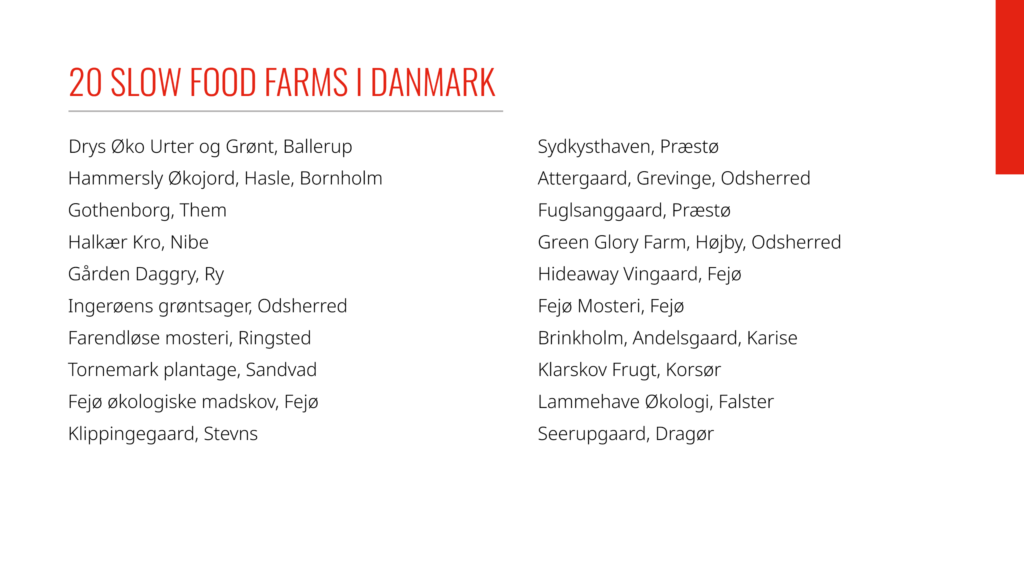
Med netværket vil Slow Food samle og synliggøre disse jordbrug og være en stærkere stemme i arbejdet for mere bæredygtige og demokratiske madsystemer. På verdensplan er der nu over 662 Slow Food Farms i 73 lande – 20 i Danmark – og der kommer hele tiden flere til.
Kendetegn ved en Slow Food Farm
🫛Prioriterer biodiversitet. Jordbruget er et levende økosystem, hvor mange forskellige grøntsager, frugt og træer gror sammen. Høj dyrevelfærd er naturlig med dyr udenfor.
🚜Opbygger en sund økologisk jord gennem grønt jorddække, minimal jordbearbejdning, kompost og tid. Jord, hvis levende mikroorganismer bliver fodret. Jord, som regenererer og bliver mere frugtbar for hver sæson.
🤝 Knytter bånd til forbrugerne. Ofte direkte salg med grøntsags-abonnement, gårdbutik og markeder. For at flytte indtjeningen fra mellemhandlere til producenter, så både producenter og forbrugere får en fair pris. Events på gården. Liv på landet.
💶Har en varieret produktion med flere kilder til indtægt. Skaber et rigt liv for medarbejdere og familie. Er bevidst om at fair aflønning af alle landbrugere skal løses politisk på globalt plan.
🌱Er bevidst om valg af frø. Gerne arvesorter med nordiske traditioner. Ikke genetisk modificerede, ikke patenterede. Frø som har brødfødt os i fællesskab i århundreder.
💧Har en cirkulær tilgang til ressourcer. Vedvarende energi og begrænset vandforbrug. Tanker om bæredygtigt byggeri. Affald fra én produktion er værdifuldt input til en anden.
🧑🌾 Opbygger og deler viden. Er en del af den forandrede fødevarefremtid, vi ønsker os.
Udelukkelseskriterier
Slow Food Farms findes over hele verden under vidt forskellige vilkår. Det er derfor også værd at nævne, at et jordbrug er udelukket fra at blive en Slow Food Farm, hvis der er:
- Pesticider, kunstgødning eller andre syntetiske agro-kemikalier
- Høj grad af specialisering, herunder monokultur.
- Brug af GMO’er eller nye genomiske teknikker (NGT).
- Dyrkning af afgrøder uden jord dvs. i andre vækstmaterialer eller hydroponics
- Opvarmede eller afkølede drivhuse.
- Primært fokus på eksportmarkeder.
- Betydelig forurening af omgivelserne.
- Brug af vækstfremmende hormoner i dyrehold.
- Krænkelse af menneskerettigheder eller dyrevelfærd.
Verdenskort – Zoom ind på de danske
Zoom ind på kortet for at se de danske Slow Food Farms. Når du klikker på kortpunktet, får du links til mere information – både Instagram, hjemmeside og adresse, så du kan støtte op ved at købe gårdens produkter.
Oplysningerne på dette kort vedligeholdes af Slow Food International.
Præsentation af de første 20 i Danmark
Vi arbejder på en flot præsentation af de danske Slow Food Farms. Indtil hjemmesiden og kampagnen på Instagram er klar, kan du se en PDF med fotos af alle jordbrug – og beskrivelser af halvdelen. Vi undskylder, at ikke alle er med endnu. Præsentationen forbedres løbende. Klik her.